
How Does Innovation Work? Is It Helping Your Brand or Is It Killing It?
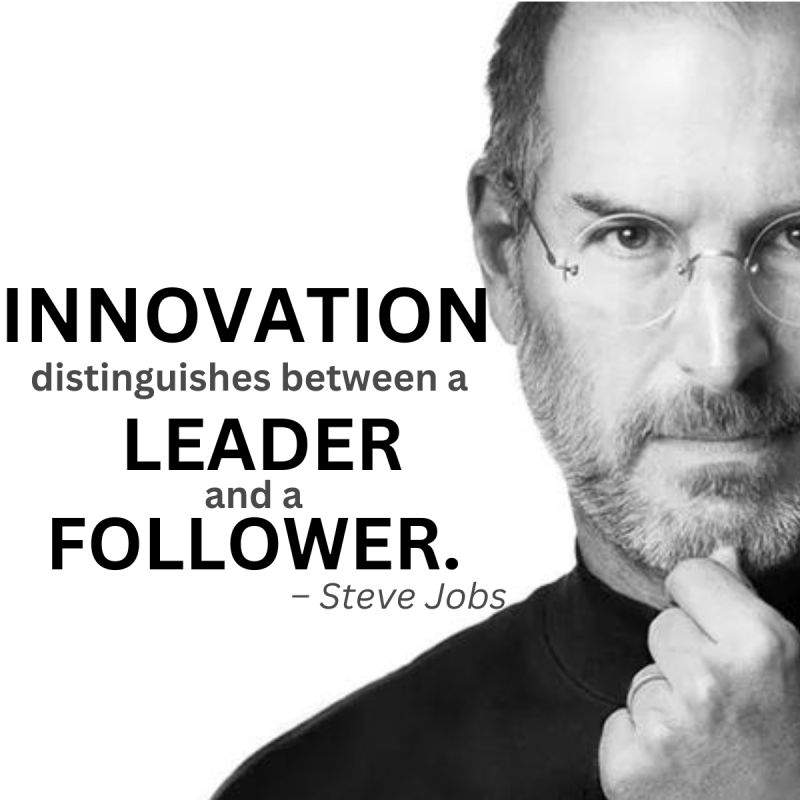
In the words of the late tech titan and entrepreneur Steve Jobs – “Innovation helps you distinguish between a Leader and a Follower.” Although we all wish to be like him, we wonder how to achieve that success in life. Where do we begin? What steps to take? And what is that perfect moment that will set us up for success? If you frequently find yourself asking these questions, you might still be far from reality yet.
The foundation for any great company, product, and brand is clarity of purpose and a crystal-clear plan to achieve it. Steve Jobs passionately believed that technology could help address many challenges as complex as healthcare. It was his commitment to provide tools to those who shared his vision that helped him design computers, laptops, and other products to support and better the human race.
It was this clear focus in his life that helped him design the best products to support all who want to use tech to solve other challenges that the human race faces. This clarity of purpose and a laser-like focus on its mission were something that most tech giants lacked back then, and even today. Most of them focus exclusively on maximizing profits and shareholder value – without considering going beyond the ordinary.
When Innovation Is Ignored
A great example of this is Sony Electronics of Japan. Sony was a dominant player in the music industry during the 1990s; however, Apple is believed to be responsible for its rapid consumer loss. Many listeners who once relied on Walkmans and cassette players transitioned to the iPod once it was launched.
The irony of this situation is that Apple was not the first to come up with this product – it was Sony, which had come up with an MP3 player-like music device, but it was shelved as they believed it would kill their Walkman. The same thing happened a few years later, but this time, it was a rival with the same product.
Yes, innovation can kill your brand if you don’t know how to handle the new product or research. An idea whose time has come cannot be resisted, and it is bound to make an impact, whether anyone likes it or not.
Innovation with Purpose: The Volvo Example
Another interesting example is the automobile company Volvo. Auto companies spend a lot on research and development, and they keep coming up with new technologies for their car models in order to be perceived as the best auto company. They are also very careful and competitive with respect to branding, marketing, and sales, as one wrong decision can be a huge loss.
A failed car brand or model will result in them having to make substantial changes to their manufacturing facilities and huge write-offs in their advertising and marketing spends. The losses are easily in the tens of millions of dollars.
Volvo has been selling cars since 1927 and it celebrats its 90th anniversary this year. Everything that the company does revolves around safety. They are always careful to highlight the fact that they don’t sell cars. They underscore their belief that they are in the business of providing a safe family lifestyle. Safety is all that they revolve around.
It is this focus on this core value that has enables companies to come up with unique products that have appealed to consumers for over a century. Volvo is an excellent, age-old example of innovation and its successful implementation driven by a strong commitment to the company's core values.
The Real Challenge: Implementation
As mentioned earlier, innovation is not exactly difficult, but its implementation is what vexes most company managements. Numerous tech companies going bankrupt have filled newspaper pages in the past few years, all because they did not have a understanding of where their products could be most effectively implemented.
This challenge is faced daily by many management teams before investing a significant amount of funds in a new product. It is not always possible to make the best possible decision, but it is possible to learn from the decisions that others have made over the years.
Conclusion
Innovation is a lot like a new business. You need to look before you leap, but it is next to impossible to know everything that can or will happen after you leap.
Best of luck to you!