
Why Commerce Students Are In Demand For High-Paying Roles
Commerce students already understand numbers, money flow and business decisions — exactly what banks, financial institutions and fintech companies look for. Recruiters don’t just want a degree; they want graduates who can read balance sheets, interpret financial data and use tools like spreadsheets, dashboards and analytics software to support real business decisions.
BCom: Still The Core Degree, But With A Twist
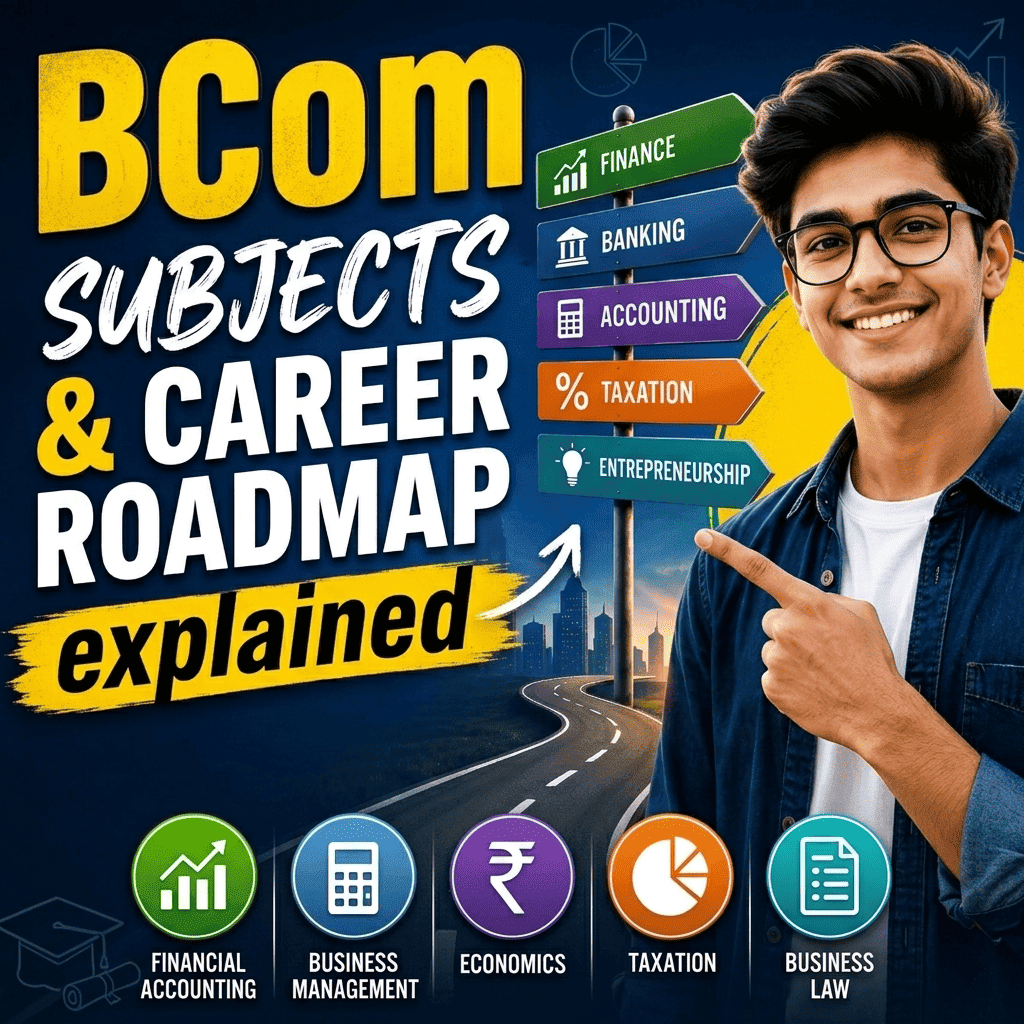
BCom remains one of the most trusted professional courses after 12th commerce because it covers fundamentals like accounting, economics, business law and taxation.
However, a plain, generic BCom is now often seen as “basic”. What really stands out on a CV is a BCom that is specialized in finance, banking or analytics, and that includes hands-on learning rather than just theory.
High Paid Courses After 12th Commerce : Key Options
Here are some of the most commonly chosen high-salary pathways after 12th Commerce, and how they fit into your long-term plan:
| Career Path | Typical Entry-Level CTC (Per Year) | Mid-Level CTC Range (Per Year) | Notes |
|---|---|---|---|
| BCom (General) – Finance / Accounts | ₹2.5 – ₹4.0 lakh | ₹5 – ₹8 lakh | Roles in accounts, audit support, junior finance roles |
| BCom (Banking & Financial Analytics) | ₹3.5 – ₹5.5 lakh | ₹7 – ₹12 lakh | Banking, financial analytics, business analyst roles |
| Investment Banking Analyst (Entry) | ₹8 – ₹15 lakh | ₹15 – ₹30 lakh | Packages vary widely by firm and city |
| Financial / Business Data Analyst | ₹4 – ₹7 lakh | ₹8 – ₹14 lakh | Strong demand across BFSI and fintech |
| CA (Freshly Qualified) | ₹7 – ₹12 lakh | ₹15 lakh+ | Higher packages in consulting and Big 4 firms |
Note: The salary figures mentioned above are approximate and indicative ranges, based on recent market trends and publicly available data. Actual salaries depend on factors such as city, company, academic performance, skills, internships, and interview performance. These numbers should be treated as estimates, not guarantees.
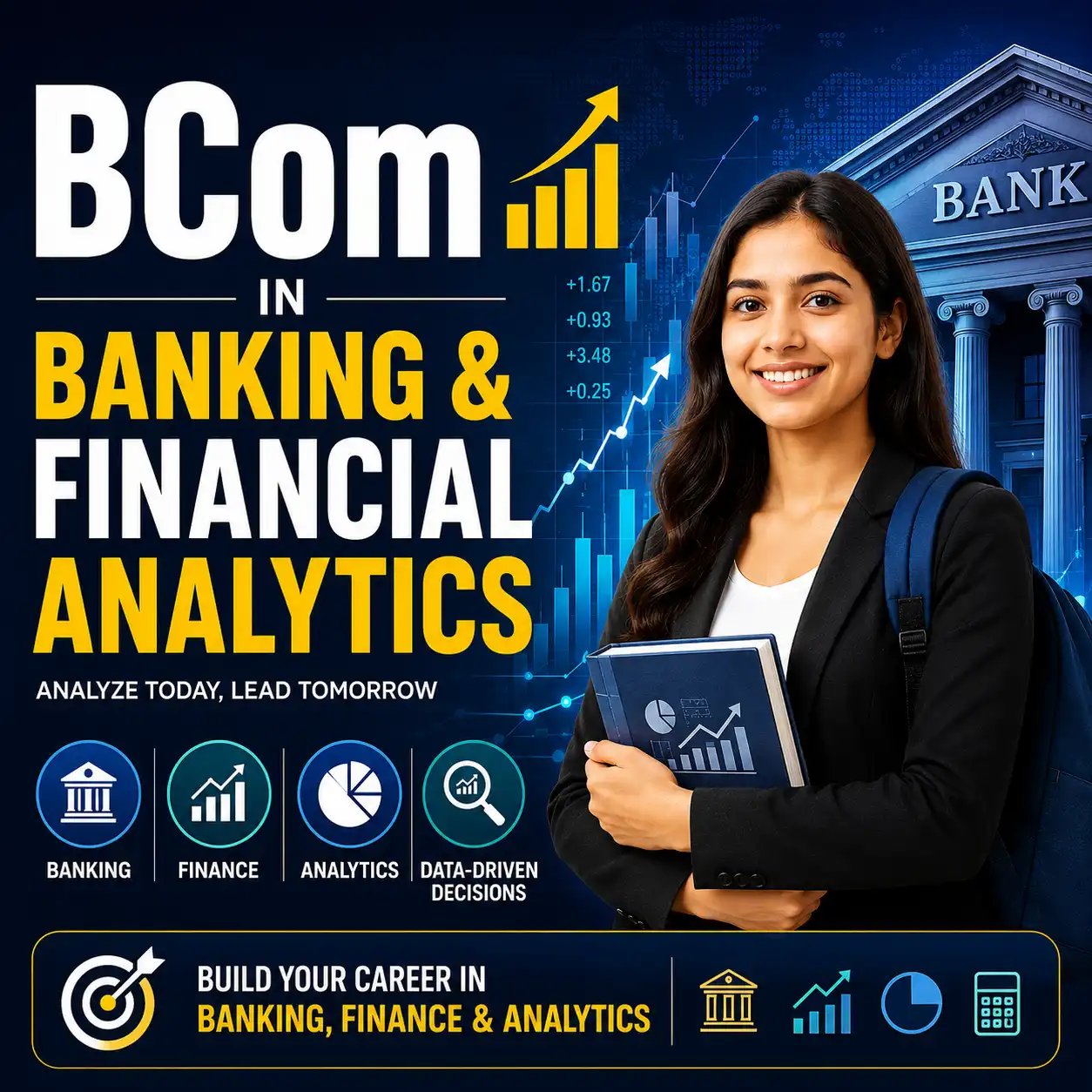
The strongest profiles usually combine a solid degree like BCom with at least one of these specialized or skill-based programs. This data shows a clear pattern: students who combine BCom with specialized skills in banking, finance and analytics tend to move into higher salary brackets faster than those with a generic degree. That is exactly what FinX Institute’s BCom in Banking & Financial Analytics is designed to support — strong fundamentals plus in-demand, industry-ready skills.
Finance-Focused BCom: Turning Theory Into Earning Power
A BCom that leans heavily into finance is a powerful launchpad if you want to work in banking, corporate finance, capital markets or financial services.
Such a program typically includes:
- Financial management, corporate finance and banking operations
- Concepts of risk, investments and portfolio management
- Training on tools such as Excel and basic financial modelling
By the time you graduate, you are not just “a commerce student”; you become someone who can join a finance team and start contributing from day one.
Why Data Analytics Is No Longer Optional
In modern finance and banking, almost every decision — from lending and risk checks to marketing campaigns and investment strategies — relies on data.
That’s why data analytics has moved from “nice to have” to “must have” for commerce graduates. When you add analytics to your skill set, you learn to:
- Collect, clean and interpret financial and business data
- Build reports and dashboards that support management decisions
- Work in roles like business analyst, financial data analyst, risk analyst and credit analyst
When a BCom program blends finance, banking and analytics, it naturally positions you for these emerging, high-growth roles.
Banking & Financial Analytics: Fast Tracks To High Packages
Banking, equity research and financial analytics are aspirational careers because of their strong salary upside and steep learning curve.
To enter these spaces, students need:
- A clear grasp of finance, accounting and markets
- Exposure to valuation techniques and financial modelling
- Comfort with tools like Excel, PowerPoint and data visualization
A program that builds these skills during graduation makes it much easier to move into analyst roles in investment banking, corporate advisory, research or strategy teams.
Career Growth: From Entry-Level To Leadership
The best high paid courses after 12th commerce have one thing in common: they focus on career outcomes, not just classroom marks.
Look for programs that offer:
- Internships, live projects and industry case studies
- Training in finance plus analytics/technology
- Mentoring and career support for higher studies and certifications such as CFA, FRM or an MBA later
With this kind of foundation, you can start in junior roles and move into senior analyst, manager or specialist positions within a few years, with corresponding jumps in salary and responsibility.
Linking Your 12th Commerce Decision To Future Salary And Growth
When you choose a course after 12th Commerce, think beyond just “getting a degree”. Ask:
- Will this course build strong finance fundamentals?
- Will it give me hands-on exposure to analytics and technology?
- Does the institute offer industry links, internships and career guidance?
FinX Institute’s BCom in Banking & Financial Analytics brings all three together. For students searching for high paid professional courses after 12th commerce , it offers a clear pathway into banking, finance, analytics and investment roles with strong long-term growth potential.
Ready to explore? Check out the BCom in Banking & Financial Analytics Program at FinX Institute — taught by 300+ industry practitioners with deep BFSI networks and a 35+ year legacy.
Visit:
finxinstitute.com/undergraduate-courses
Call: 1800 892 9030
Email:
finxinstitute.training@finxpert.org