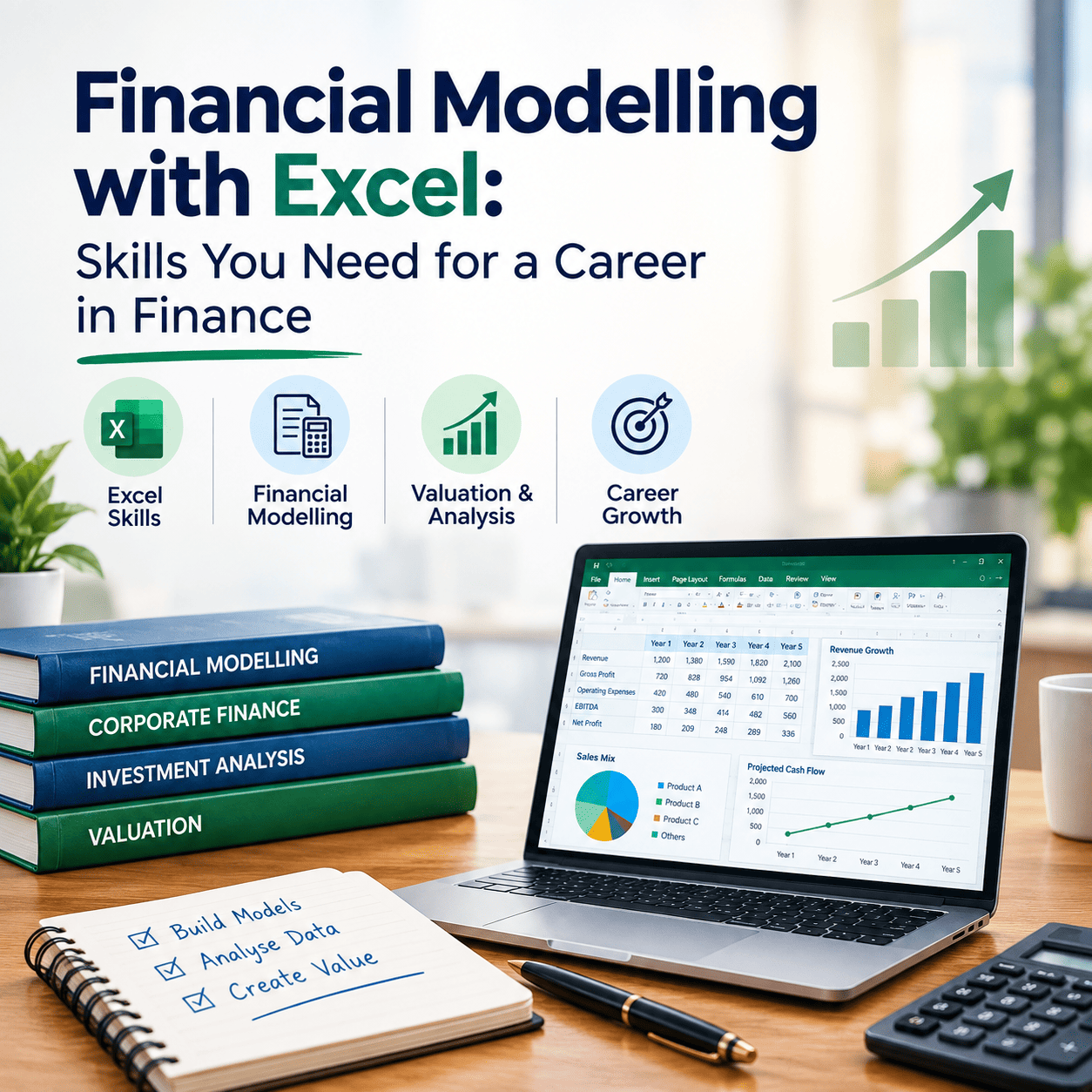
Financial Modelling with Excel: Skills You Need for a Career in Finance
Financial modelling is one of the most practical skills for students and professionals building a career in investment banking, equity research, corporate finance, valuation, or financial analysis. At its core, financial modelling evaluates a company’s historical performance, operating assumptions, and financial statements to build a structured model for decision-making.
Excel continues to organise information, build projections, test assumptions, and analyse differing business scenarios. For learners considering a financial modelling course, understanding the Excel skills behind a professional model is an important starting point.
Essential Excel Skills for Financial Modelling
Financial modelling with Excel involves much more than entering numbers into spreadsheets. Analysts need to use formulas, structure data logically, and build models that other users can understand and audit.
1. Lookup and Reference Functions
Functions such as XLOOKUP, INDEX-MATCH, and VLOOKUP help analysts retrieve and connect data across different worksheets and financial schedules.
Microsoft describes XLOOKUP as a function that searches a range and returns the corresponding value from another range, making it useful when working with large financial datasets.
2. Logical and Conditional Functions
Functions such as IF, IFERROR, SUMIFS, and COUNTIFS are frequently used to build assumptions and manage financial calculations under different conditions.
For example, SUMIFS can aggregate values based on multiple criteria, while IF statements can help a model respond dynamically to changing assumptions. Microsoft includes IF, SUMIFS, and XLOOKUP among its featured Excel functions.
3. Financial Functions
A strong Excel financial modelling skill set also includes functions such as NPV, IRR, XNPV, and XIRR.
These calculations are particularly useful when analysing investment opportunities, projected cash flows, and valuations. Microsoft categorises XNPV and XIRR among Excel's financial functions for analysing cash flows occurring at different dates.
From Excel Skills to Three-Statement Financial Models
Learning formulas individually is only the beginning of financial modelling training. Professional financial models often connect the:
- Income Statement
- Balance Sheet
- Cash Flow Statement
Changes in revenue, costs, working capital, capital expenditure, or financing assumptions should flow logically through these statements.
This is where financial modelling moves from spreadsheet knowledge to applied financial analysis.
Valuation and Scenario Analysis
Financial models estimate the business’s worth.
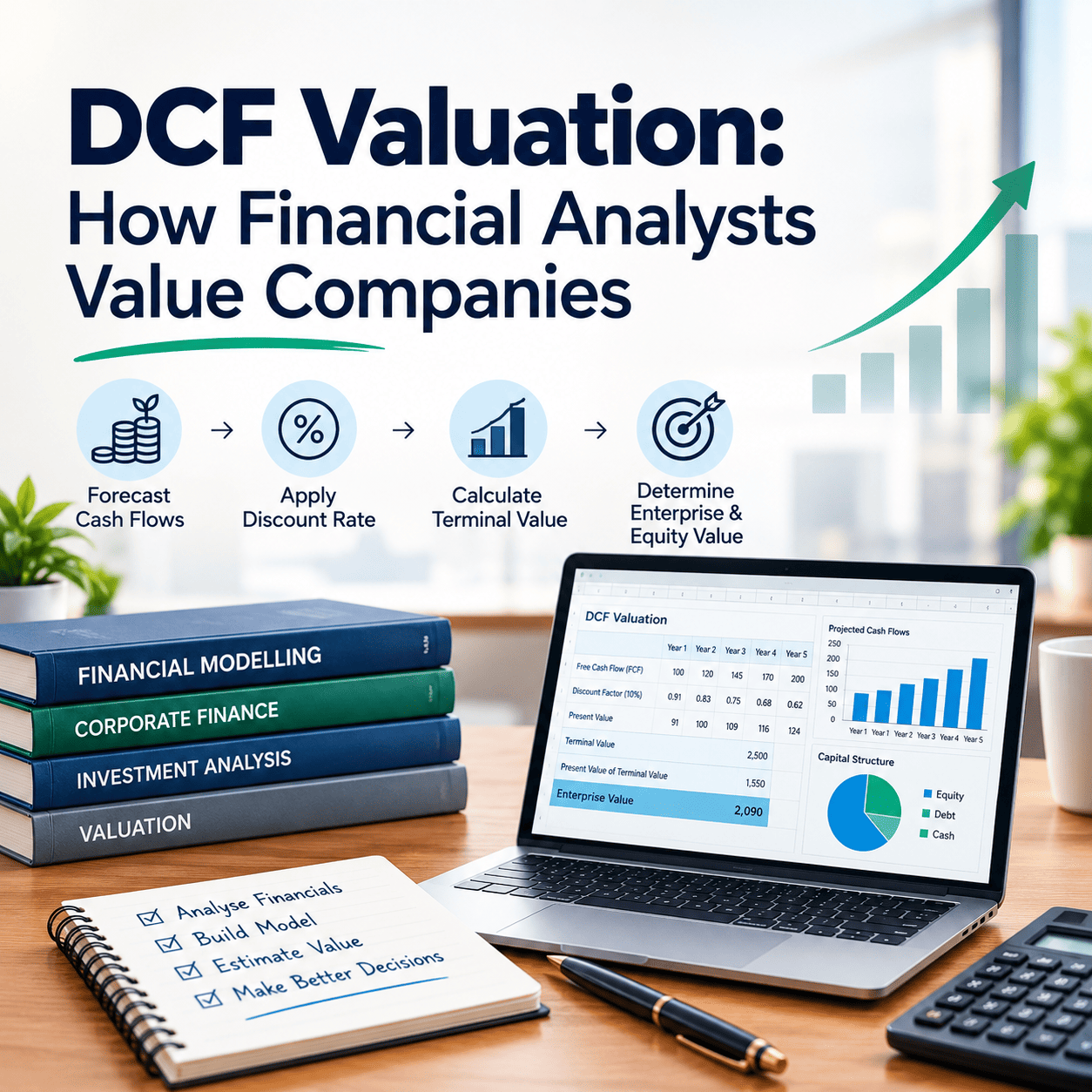
One widely used approach is Discounted Cash Flow (DCF) valuation, where projected future cash flows are discounted to estimate their present value. Analysts may also compare different scenarios to understand how changes in assumptions affect valuation.
For example, a model can examine what happens if:
- Revenue growth slows
- Operating margins improve
- Capital expenditure rises
- Discount rates change
This ability to test assumptions is one reason financial modelling is useful across equity research, corporate finance, investment analysis, and related roles.
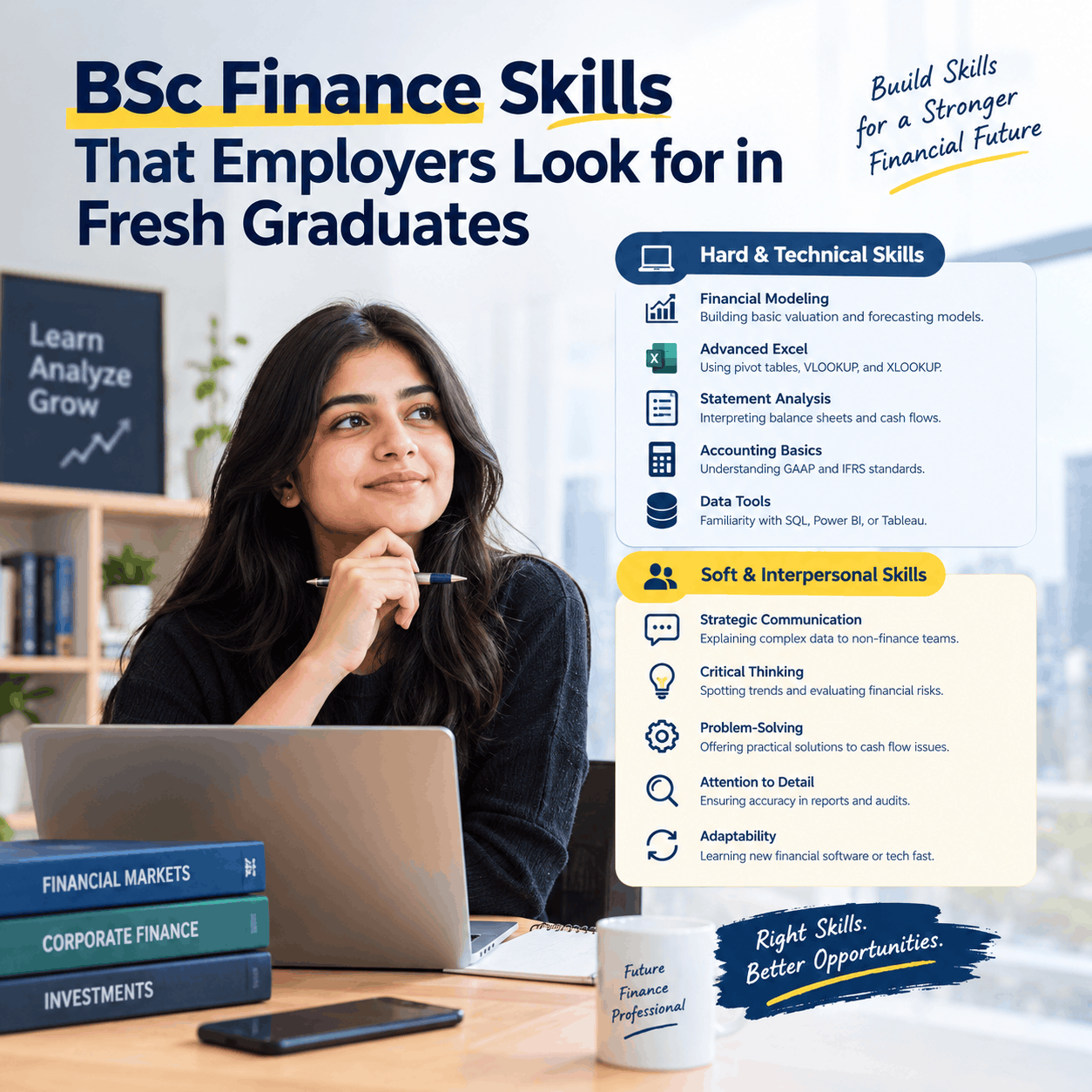
Students exploring different finance career directions can also read FinX Institute's guide to 10 career paths after a BSc in Finance.
Why Good Financial Models Need More Than Excel
Knowing Excel shortcuts and formulas does not automatically make someone a strong financial modeller.
A useful model also requires an understanding of accounting, financial statements, valuation principles, business drivers, and the ability to communicate conclusions clearly.
As technology becomes increasingly integrated into financial analysis, finance professionals also benefit from understanding how analytics and digital tools influence their work. FinX Institute discusses this further in its article on how AI and data analytics are changing financial careers.
Build Practical Financial Modelling Skills with FinX Institute
For learners who want structured, hands-on exposure, the Equity & Financial Modelling (EFM) program at FinX Institute (formerly BSE Institute) focuses on fundamental analysis, financial statement analysis, Excel-based modelling, equity valuation, DCF, forecasting, and practical financial modelling projects.
Learners interested in a financial modelling certification can explore the program to learn more about its curriculum and practical training.
Ready to develop practical Excel, valuation, and financial modelling skills?
Explore the Equity & Financial Modelling (EFM) Program at FinX Institute and learn how structured financial modelling training can help you build skills for a career in finance.
Explore the EFM Program
Learn more about Excel financial modelling and practical financial analysis with FinX Institute.