
Difference Between Theoretical and Practical Finance Learning
Theoretical finance taught in a BSc in Finance or other finance courses after 12th focuses on core principles like time value of money, capital markets, financial accounting, and valuation models. Classroom learning emphasizes frameworks, mathematical proofs, and simplified case studies that isolate specific variables to teach concepts clearly. This structured approach builds the essential vocabulary and analytical foundation every student needs before tackling complex problems in internships or entry-level jobs.
Practical industry exposure during graduation turns those frameworks into usable skills by placing students in real-world situations where data is messy, assumptions fail, and decisions have consequences. Hands-on internships, live projects, or simulated trading teach financial modelling, client communication, and regulatory awareness in context, making graduates from Bachelor’s Degree in Finance programs more job-ready.
For students choosing courses in finance after 12th or exploring career opportunities after 12th commerce, practical learning shortens the gap between study and professional performance and significantly boosts employability.
Importance of Internships for Finance Students
Internships are the most direct form of industry exposure for students in finance courses after 12th and those enrolled in a BSc in Finance . Key reasons internships matter:
- Apply classroom concepts to live problems, reinforcing learning quickly.
- Build technical familiarity with Excel modelling, accounting software, and market-data terminals.
- Experience workplace norms: reporting lines, client communication, and teamwork under deadlines.
- Expand professional networks that help with job placements and mentorship.
- Gain clarifying insights into specializations — corporate finance, investment banking, wealth management, or risk — so students choose the right career path.
For students seeking career opportunities after 12th commerce, internships during a Bachelor’s Degree in Finance shorten the learning curve after graduation and improve employability.
How Industry Exposure Improves Finance Skills
Industry exposure strengthens both technical and soft skills that matter in finance jobs:
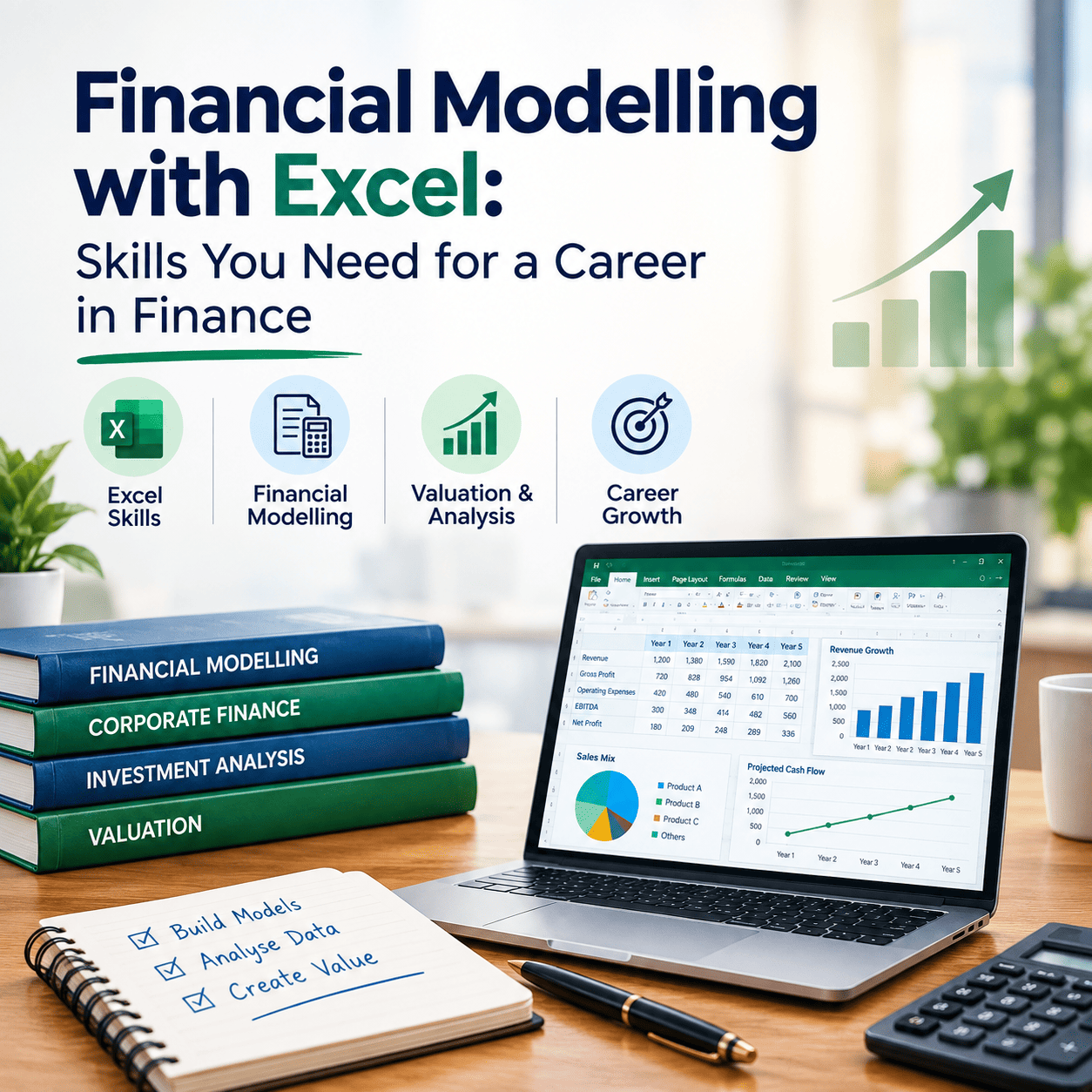
- Technical skills: Real-world modelling, valuation, forecasting, financial statement analysis, and use of industry tools (Bloomberg/Eikon alternatives, ERP systems, data-visualization software).
- Analytical thinking: Interpreting imperfect data, stress-testing assumptions, and presenting defensible conclusions.
- Communication skills: Translating numeric insights into concise narratives for managers or clients.
- Time and project management: Delivering accurate work under tight timelines common in reporting cycles.
- Ethical judgment and regulatory awareness: Understanding compliance requirements and professional standards that textbooks often summarize but don’t simulate.
These improvements make classroom concepts actionable and enhance performance in entry-level roles, internships, and campus recruitment drives.
Skills Recruiters Expect from Finance Graduates
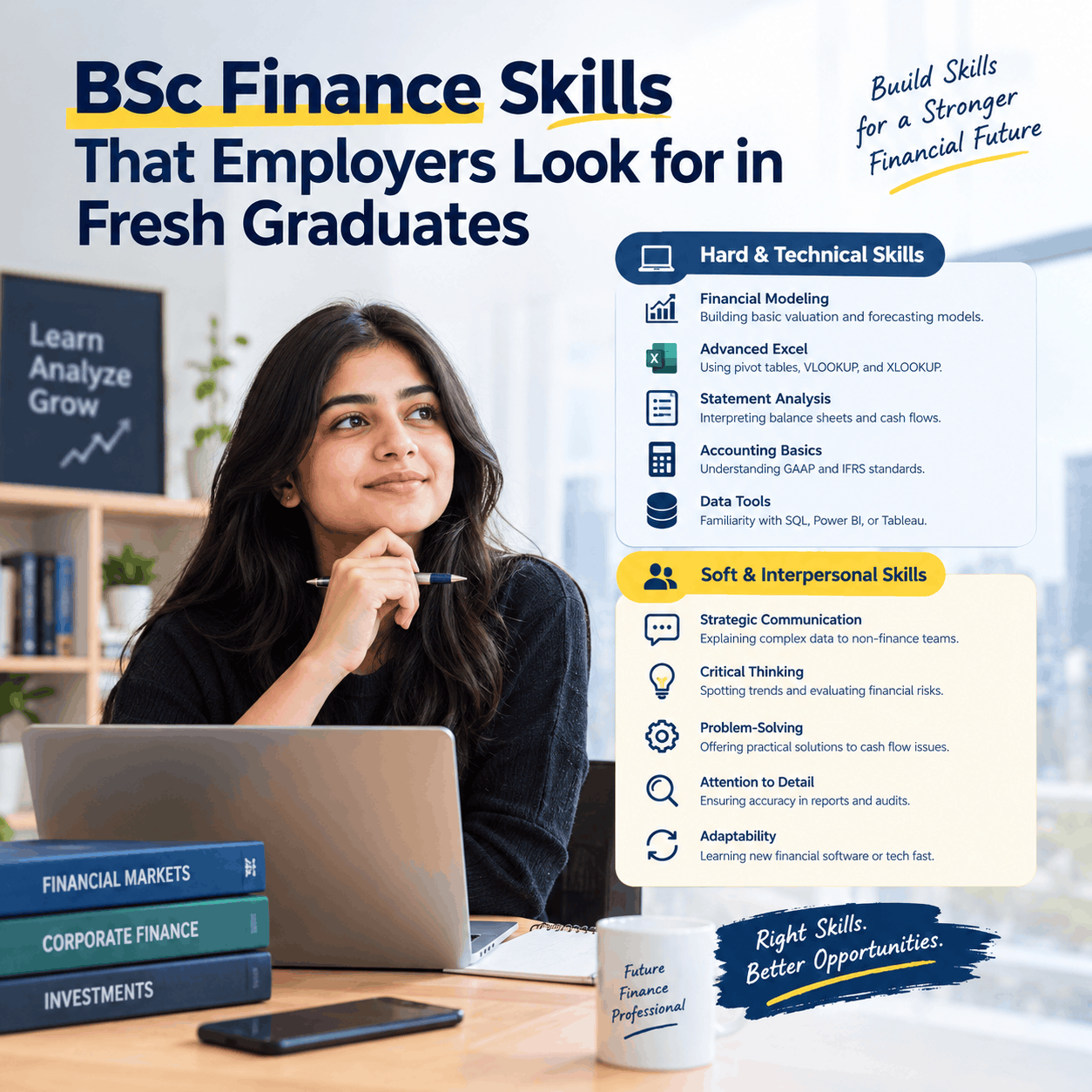
Recruiters today expect finance graduates to bring more than academic marks. They want candidates who understand financial concepts, can work with data, and are ready to contribute from day one.
Common expectations include strong knowledge of accounting and finance fundamentals, good Excel and analytical skills, attention to detail, and the ability to communicate clearly.
Employers also value adaptability, professionalism, and a willingness to learn. Students who complete a BSc in Finance with practical exposure are often better prepared to meet these expectations.
That is why students exploring courses in finance should look for programs that combine theory with hands-on learning. The BSc Finance course at FinX Institute (Formerly, BSE Institute) is designed to support this kind of career development and help students become more industry-ready.
Career Benefits of Practical Learning in Finance
Practical learning offers several long-term career benefits. It helps students become more confident in interviews, more prepared for internships, and more capable in entry-level roles. It also gives them a better understanding of which career path in finance suits them best.
For students interested in career opportunities after 12th commerce, this can make a major difference. Instead of entering the workforce with only textbook knowledge, they step out with experience, exposure, and a clearer career direction.
A practical BSc in Finance also helps students stand out in a competitive job market, especially when they can show project work, internships, or industry training.
Conclusion
A BSc in Finance is a strong academic choice, but practical industry exposure is what makes the learning truly valuable.
Theory teaches students the language of finance, while practical experience teaches them how to use it in the real world. For students exploring finance courses after 12th, choosing a program that includes industry exposure can lead to better skills, stronger confidence, and improved career outcomes.
The BSc Finance course at FinX Institute (Formerly, BSE Institute) is a good example of how a finance education can go beyond the classroom and prepare students for real professional success.
For students looking for meaningful career opportunities after 12th commerce, practical learning is not just helpful, it is essential.
Ready to explore? Check out the BSc in Finance Program at FinX Institute — taught by 300+ industry practitioners with deep BFSI networks and a 35+ year legacy.
Visit:
finxinstitute.com/undergraduate-courses
Call: 1800 892 9030
Email:
finxinstitute.training@finxpert.org