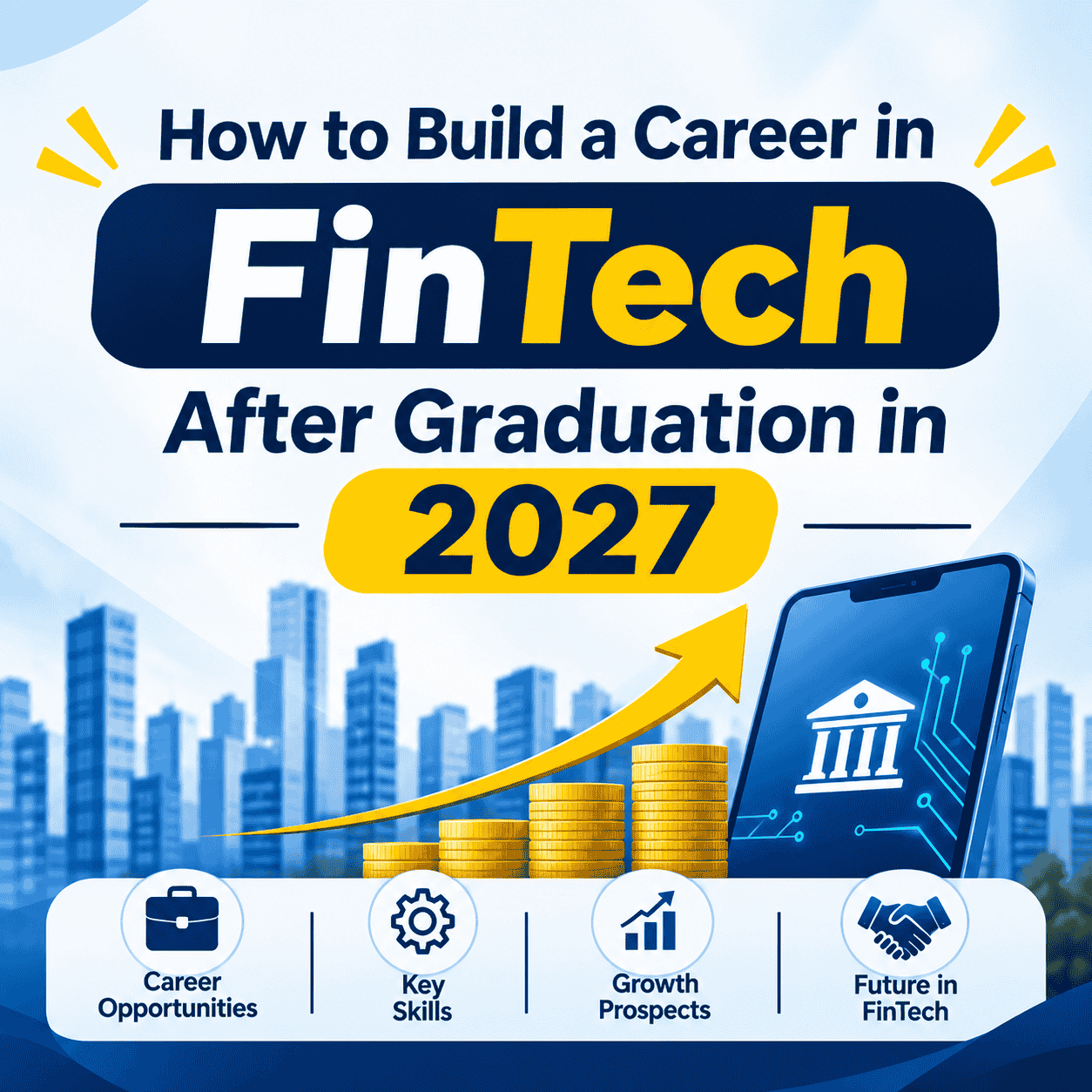
Finance is no longer limited to banks, stock markets, and traditional financial services. Digital payments, artificial intelligence, blockchain, and automated investment platforms are transforming how people manage money. This makes building a career in Fintech after graduating in 2027 a strong mix of financial literacy, modern technical skills, and a solid understanding of digital regulation.
But how do you enter this industry? Whether you come from commerce, finance, management, or technology, the right Fintech Course, relevant skills, and practical experience can help you prepare for a career in financial technology.
What Is FinTech, and Why Consider It in 2027?
FinTech, aka Financial Technology, uses technology to improve financial products, services, and processes. From digital lending to UPI transactions, FinTech enables faster, more accessible financial services.
According to the RBI Annual Report 2024–25, financial innovation includes developments in digital currencies, artificial intelligence, and fraud detection.
1. Identify Your FinTech Career Path
FinTech combines technical and business-oriented roles. Your educational background and interests can help determine which direction to pursue.
Technical career opportunities:
- FinTech Software Developer
- Financial Data Analyst
- Blockchain Developer
- Cybersecurity Analyst
Finance and business career opportunities:
- FinTech Business Analyst
- Digital Payments Analyst
- Risk and Compliance Analyst
- Financial Technology Consultant
Each role requires different competencies. A Fintech Degree can help students build interdisciplinary knowledge before specialising.
2. Develop Essential FinTech Skills
Employers value professionals who understand both financial processes and emerging technologies.
Financial Knowledge
Build an understanding of banking operations, financial markets, investment products, digital lending, and risk management.
Programming and Data Analytics
Learn Python for Finance, SQL, database management, and analytical tools. These skills support financial data analysis, automation, and risk modelling.
Emerging Technologies
Develop familiarity with artificial intelligence, machine learning, blockchain, cloud computing, and APIs.
Regulatory Awareness
Understanding KYC, AML, data security, and RBI regulations is important when working with financial institutions. It also helps you learn how AI and Data Analytics are changing financial careers.
3. Choose the Right FinTech Education
Graduates can explore Fintech Online Courses, Fintech Certification Courses, or postgraduate qualifications depending on their career objectives.
Short-term certifications may introduce specific technologies. However, students seeking comprehensive knowledge across finance, programming, analytics, and business strategy can consider a structured postgraduate Fintech Program.
The Master in Management Studies (Financial Technology) offered by FinX Institute (formerly BSE Institute Ltd.), in collaboration with Garware Institute of Career Education and Development, is a two-year classroom-based program.
Its curriculum covers:
- Foundations of FinTech and Financial Markets
- Programming for FinTech and Database Management
- Machine Learning for Data Analytics
- OpenStack APIs and Cloud Computing
- Blockchain Applications and Algorithmic Trading
This combination helps graduates develop knowledge across financial systems and technological applications.
4. Gain Practical Experience
A qualification alone may not demonstrate your ability to solve real financial problems.
Strengthen your profile through internships, research projects, case studies, and practical assignments.
For example, you could develop a financial dashboard, analyse transaction data, or design a basic fraud-detection model.
5. Build Your Professional Network
Connect with financial technology professionals through LinkedIn, industry events, internships, and professional communities.
Maintain a portfolio showcasing relevant projects, technical abilities, and financial knowledge.
When applying for opportunities, demonstrate how your skills can address business challenges rather than simply listing certifications.
Can You Pursue FinTech Without a Technical Degree?
Yes. Graduates from commerce, finance, and management backgrounds can explore FinTech careers.
However, technical requirements vary across roles. Business analysis and compliance positions may emphasise financial expertise, while software development and data science require stronger programming skills.
A structured Fintech Course can help bridge relevant knowledge gaps.
Start Your FinTech Career Journey with FinX Institute
Explore the MMS Financial Technology Program and Apply for 2027 →
Visit: finxinstitute.com | Call: 1800 892 9030 | Email: Finxinstitute Training