
Should You Choose a 1-Year PG Diploma in Predictive Analytics After Graduation in 2026?
A plain, practical breakdown of what the program offers, what the market demands, and whether the timing is right.
The job market for fresh graduates has changed dramatically. Degrees alone no longer guarantee a competitive edge — employers increasingly want professionals who can turn raw data into decisions. In 2026, one credential has been gaining remarkable traction among graduates across streams: the 1-year PG Diploma in Predictive Analytics.
Why Graduates Are Choosing Predictive Analytics in 2026
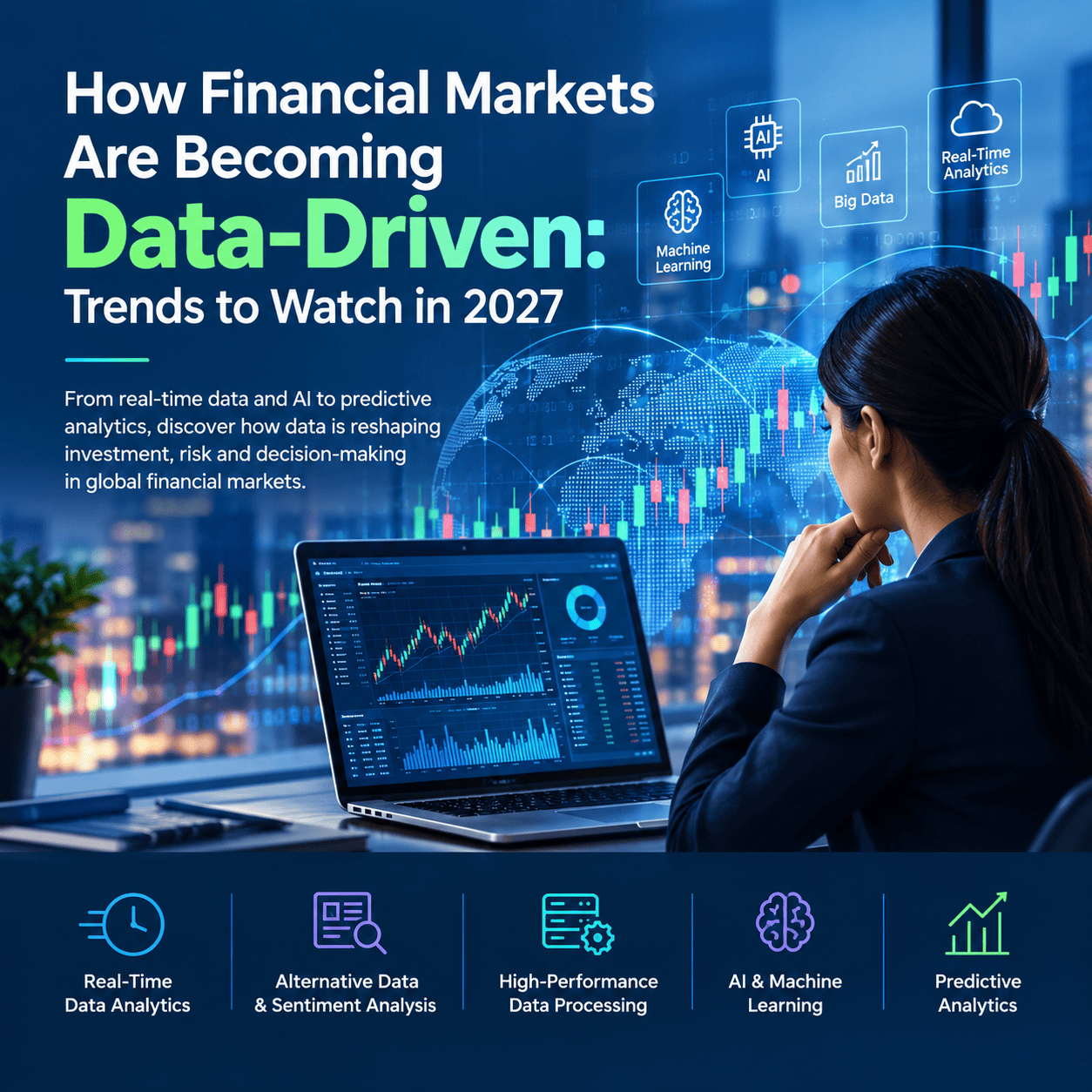
Data is now the most valuable resource that every business — from banking to e-commerce to healthcare — runs on. But collecting data is only half the battle. The real competitive advantage lies in predicting what that data means for the future. That is exactly what predictive analytics does.
Fresh graduates who choose a predictive analytics course after graduation are stepping into a market where demand is running well ahead of supply. There are three clear reasons why graduates are making this choice in 2026:
Career Advantages of a 1-Year Specialised Program
The debate between a broad MBA and a focused PG diploma comes down to one question: what does the job market actually reward? In 2026, the answer is increasingly specialised. A 1-year PG Diploma in Predictive Analytics is a professional program designed to equip students with the skills to forecast trends and optimise business decisions using statistical modelling and machine learning.
Faster ROI
A 2-year MBA costs 2–3× more in tuition and two additional years of foregone income. The PG diploma at FinX Institute is priced at approximately ₹2.45 lakhs for the full program, with graduates entering the workforce in 12 months.
Industry-Ready Skill Set
Unlike general management programs, this curriculum is built entirely around technical and applied skills employers expect on day one — skills that general MBA graduates take 2–3 years of on-the-job experience to develop.
Recognised Credentials
Offered in collaboration with GICED (Garware Institute of Career Education and Development), University of Mumbai — lending the qualification genuine academic credibility alongside industry relevance.
Access to a Practitioner Network
FinX Institute, with the legacy of 35+ years of Bombay Stock Exchange, brings 300+ world-class practitioners as faculty. Learning from active professionals in BFSI, Fintech, and Capital Markets is an edge no purely academic program can replicate.
Core Curriculum & Skills You Gain
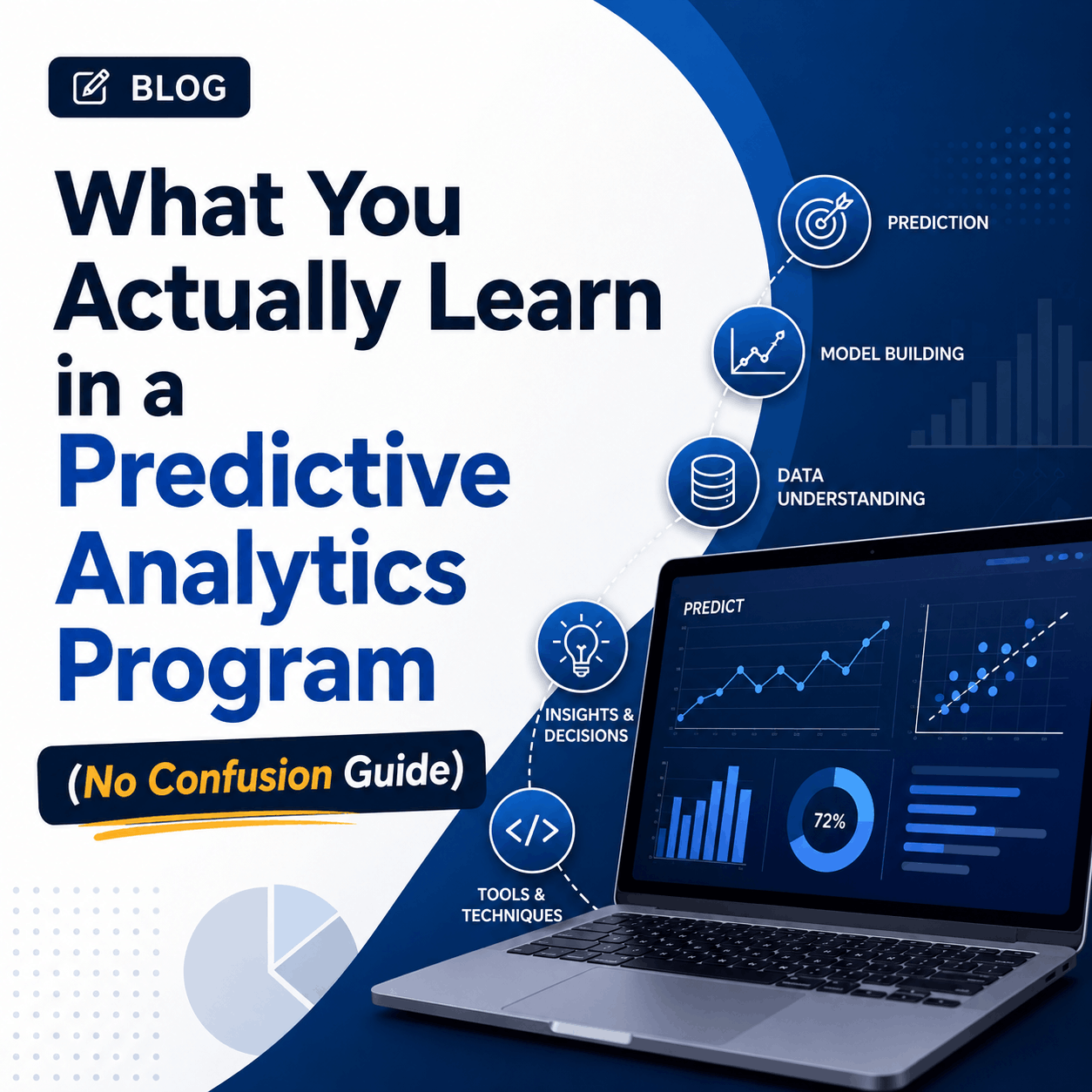
Programs generally cover the following technical areas to bridge the gap between raw data and business strategy:
Statistical Foundation
Probability theory, regression analysis, and hypothesis testing — the quantitative backbone for evaluating datasets critically and identifying patterns.
Technical Tools
Hands-on training in Python, R, Tableau, and SQL — the practical fluency that employers test for in every analytics interview.
Machine Learning
Supervised and unsupervised learning — classification, clustering, deep learning, hyperparameter tuning, and performance evaluation on real-world datasets.
Specialised Analytics
Time series forecasting, risk assessment, and text analytics. Particularly valuable for finance, supply chain, marketing intelligence, and customer sentiment analysis.
Data Mining & Visualisation
Extracting patterns and presenting them through Tableau dashboards and BI tools for clear, actionable business reporting.
Big Data & Capstone
Large-scale data infrastructure concepts plus a real-world capstone project solved end-to-end — the centrepiece of your graduate portfolio.
Eligibility
A graduate degree from a recognised university with a minimum of 60% marks. Graduates from engineering, MCA, BCA, mathematics, economics, or quantitative fields have an edge — though students from all backgrounds are considered. Working professionals are also eligible to apply.
Job Opportunities After Completion
Graduates of the 1-year PG diploma in predictive analytics qualify for a wide range of roles across industries. Entry-level salaries typically range from ₹4–7 LPA, with mid-career professionals (3–5 years) reaching ₹10–15 LPA. Senior specialists at MNCs and product companies earn ₹20–30 LPA or above.
| Role | Industry | Avg. Starting Salary (India) |
|---|---|---|
| Data Analyst | IT, BFSI, E-Commerce | ₹4–7 LPA |
| Predictive Modeler | Finance, Healthcare, Retail | ₹5–9 LPA |
| Business Intelligence Analyst | Consulting, FMCG, Tech | ₹5–8 LPA |
| Machine Learning Analyst | Tech, Fintech, Research | ₹6–10 LPA |
| Data Science Executive | MNCs, Product Companies | ₹7–12 LPA |
| Risk Analyst | Banking, Insurance, NBFCs | ₹5–9 LPA |
| Marketing Analyst | E-Commerce, FMCG, AdTech | ₹4–7 LPA |
| Operations & Strategy Analyst | Logistics, Consulting | ₹4–8 LPA |
The industries hiring most aggressively in 2026 are BFSI, fintech, e-commerce, healthcare, and logistics — all sectors experiencing rapid digital transformation and an urgent need for data-driven decision-making.
Complementary Certifications to Accelerate Growth
Graduates can also pursue internationally recognised certifications alongside their career, including:
Is It the Right Time to Enroll in 2026?
The case for enrolling now — rather than waiting — is supported by both market timing and institutional quality.
The Talent Gap Is Real
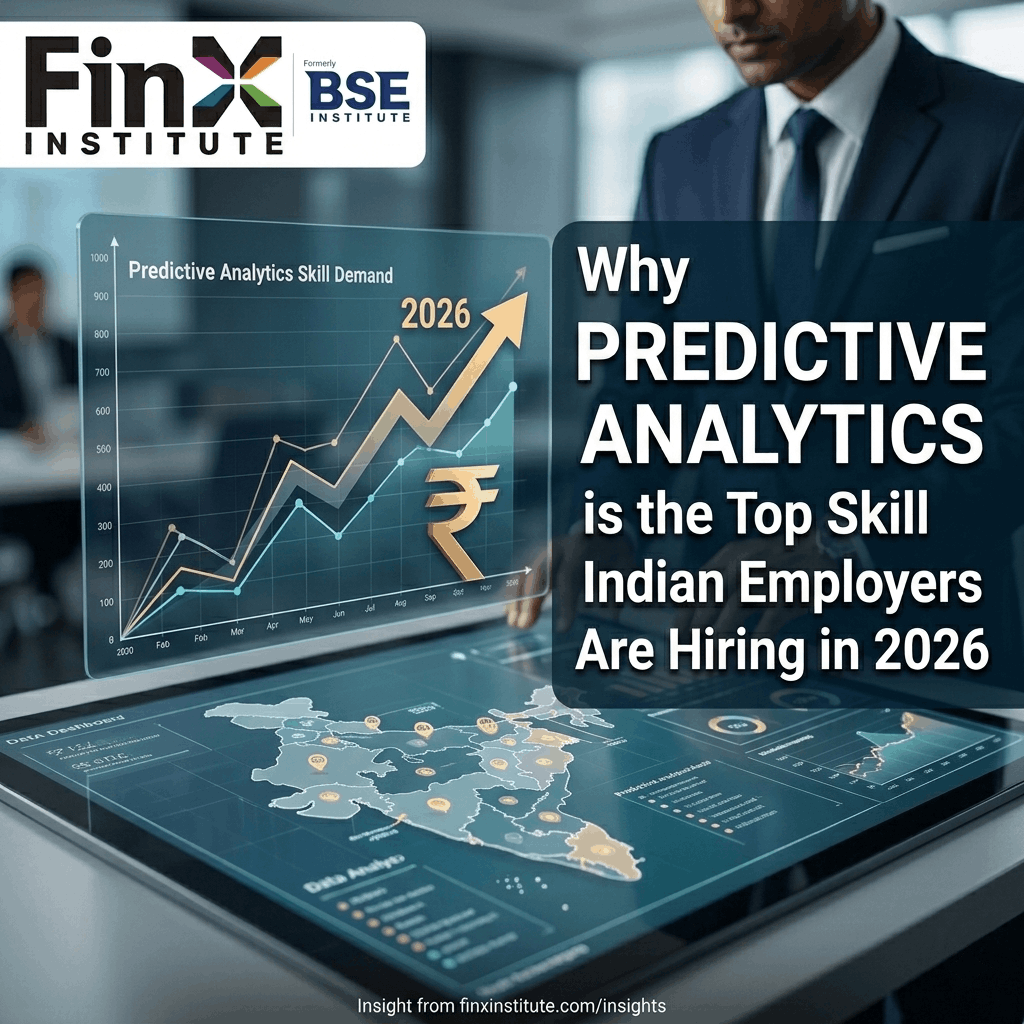
India currently holds approximately 17.4% of global analytics job postings, making it one of the world's most active hiring markets for data skills. At the same time, fewer than 20% of analytics job postings are filled within 30 days — a clear signal that qualified candidates are still scarce relative to demand. Graduates who complete a structured PG diploma in predictive analytics in 2026 will enter a hiring environment where their skills are actively sought and well-compensated.
AI Is Expanding the Role, Not Replacing It
A common concern among prospective students is whether AI tools will make analytics professionals redundant. The evidence points in the opposite direction. AI automates routine data queries and report generation — but it creates a greater need for professionals who understand model logic, can validate outputs, and translate statistical findings into strategic decisions. In 2026, the most valuable analysts combine tool proficiency with critical thinking, precisely what the PG diploma in predictive analytics is designed to produce.
Why FinX Institute Is the Right Choice
FinX Institute (formerly BSE Institute Ltd) offers a uniquely credible environment for this program.
- 35+ year institutional legacy rooted in the BSE ecosystem — the world's fastest stock exchange
- 300+ practitioner faculty from active roles in capital markets, BFSI, and data-driven finance
- Industry-aligned curriculum built with direct input from employers in India's top financial and technology firms
- GICED affiliation with University of Mumbai — academically credible credentials alongside industry relevance
- 20,000+ trained professionals in the alumni network — a valuable resource for mentorship and job referrals
- Placement assistance with top BFSI recruiters including Kotak, Groww, Citi, and Mirae Asset on campus
The admission process involves filling an application form online, appearing for an aptitude test, and clearing a personal interview round. Applications for 2026 are currently open.
"One year. One specialization. A career that compounds for decades."
PG Diploma in Predictive Analytics · FinX Institute · 2026